
Isuzu Dmax performance upgrades are some of the most effective you can do on a diesel ute. The 4JJ1 and 4JJ3 are tough engines that respond well to tuning, and with the right supporting parts they make big gains without giving up reliability.
This guide covers which D-Max engine you have, what goes into a 200HP and 250HP package, how manual and auto versions differ, and what to sort out before you add power.

Which D-Max engine do you have?
The right parts depend on the engine and year. Here’s how the range breaks down:
- 4JJ1, 2006 to 2012: early D-Max, plus the Holden Rodeo and Colorado of that era. No DPF.
- 4JJ1, 2012 to 2016: first-generation RT D-Max and MU-X. No DPF.
- 4JJ1 with DPF, 2017 to 2020: facelifted D-Max and MU-X.
- 4JJ3, 2020 onwards: current D-Max and MU-X, rated at 140kW and 450Nm from the factory.
Transmission matters too. Manuals need a stronger clutch once torque goes up. Autos need extra cooling and transmission tuning.
Here are the drive in, drive out packages we list for each engine:
| Engine | Packages listed |
|---|---|
| 4JJ1, 2006 to 2012 | 200HP manual and auto, 250HP manual and auto |
| 4JJ1, 2012 to 2016 | 250HP manual and auto |
| 4JJ1 with DPF, 2017 to 2020 | 4JJ3 turbo conversion |
| 4JJ3, 2020 onwards | 200HP manual and auto |
If your D-Max isn’t covered by a listed package, send us the details. We can usually put together the same parts as a tailored quote.
Stage 1: the 200HP package
A 200HP package suits most D-Maxes used for towing, touring and daily driving. It adds a tune and the parts needed to support it, while keeping the factory turbo.
Our 4JJ1 (2006 to 2012) 200HP manual package includes:
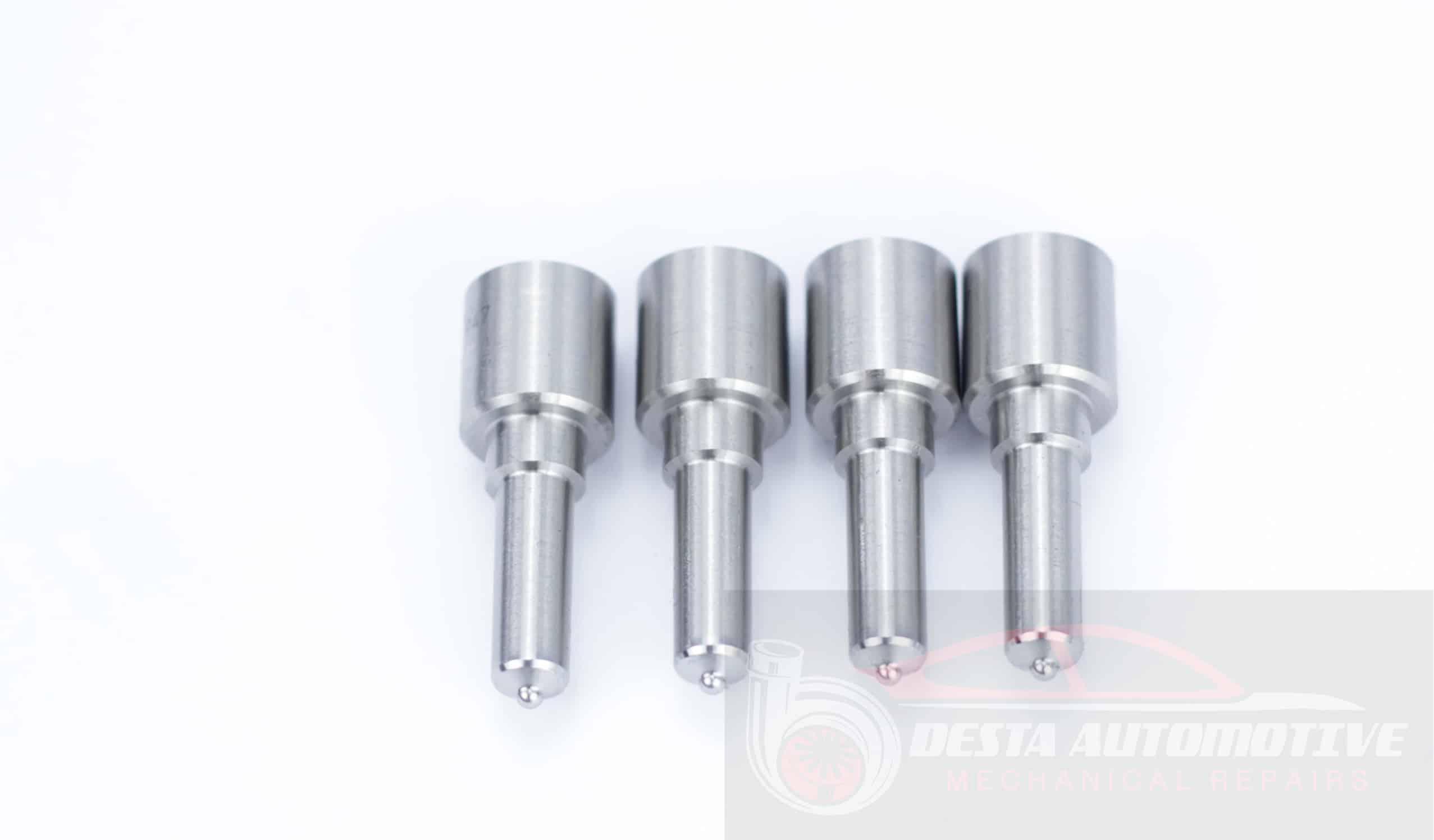
- Genuine +30 injector nozzles
- BRC 350HP clutch and flywheel kit
- ECU Shop Ultraboost
- ECU calibration
- Custom dyno tuning
The 4JJ3 200HP manual package swaps the injector nozzles for a BRD stainless dump pipe or Manta stainless exhaust, and uses a single mass clutch and flywheel conversion.
Automatic packages drop the clutch and add transmission upgrades instead. The 4JJ3 200HP auto package, for example, includes a transmission cooler kit and transmission tuning, along with the exhaust, Ultraboost, ECU calibration and dyno tune.
Why the clutch and transmission parts matter
The factory clutch on a manual D-Max is designed for factory torque. Add a tune and it will start to slip, usually when towing or overtaking. A heavy duty clutch fixes that. Read more in our guide to heavy duty vs standard clutches.
On automatics, more power means more heat in the gearbox. A cooler and transmission tune keep temperatures and shift quality under control.
Stage 2: the 250HP package
Past about 200HP, the factory turbo becomes the limit. A 250HP build adds a larger turbo and the parts it needs to breathe.
The 4JJ1 (2006 to 2012) 250HP manual package includes:
- PPRC or Flex R31 44mm gated turbo
- +30 injector nozzles
- PSICO airbox
- PDI front mount intercooler
- Manta stainless exhaust (with cat and hotdog)
- BRC 350HP clutch and/or flywheel kit
- ECU Shop Ultraboost (two tuning options)
- ECU calibration
- Custom dyno tuning
Each part has a job. The bigger turbo moves more air, the intercooler keeps intake temperatures down, and the airbox and exhaust stop the engine choking on either end. Leave one out and the others can’t do their job properly.
The two tuning options in the Ultraboost are useful on a D-Max that works and plays. One can be set for daily driving and the other for towing or heavier loads.

DPF 4JJ1 (2017 to 2020): the 4JJ3 turbo conversion
The DPF-equipped 4JJ1 uses a different turbo to earlier models. Our 4JJ3 turbo conversion replaces the factory MHI turbo with a genuine 4JJ3 IHI turbo.
The kit keeps the factory airbox and coolant overflow bottle in place. A custom VNT mount lets the turbo run factory boost control, so no extra tuning is needed for the turbo itself. Installation, tuning and exhaust upgrades are available as extras.
The conversion suits owners whose factory turbo is tired or has failed. Common signs include slow boost build, a whine or whistle that wasn’t there before, oil in the intake pipes and more smoke than usual. If you’re seeing these, have the turbo checked before planning anything else.
For bigger builds on these models, there are also bolt-on turbo options such as the Desta 44mm PPRC turbo for the 2017 to 2019 DPF 4JJ1. A larger turbo on a DPF model still needs a tune and a healthy DPF, and the DPF should stay fitted.
Going past 250HP: bigger injectors
Once a 4JJ1 has an upgraded 44mm turbo, the next limit is fuel. Genuine Denso +50 4JJ1 nozzles are the next step and can take a non-DPF 4JJ1 into the 270 to 400HP range at the wheels, depending on the rest of the build.
Nozzles or new injectors?
Nozzles fit into your existing injector bodies. That works well when the injectors are healthy. If they’re worn, leaking back or have high kilometres on them, a new set is the better base for more power.
Genuine Denso 4JJ1 injectors are listed in standard, +30 and +50 versions, for example the +30 4JJ1 injectors for the 2012 to 2016 D-Max and MU-X. Whenever injectors come out, new washers and seals go back in. A leaking injector seat lets combustion gas past and causes problems of its own.
Our guide to high flow diesel injector upgrades explains how +30, +50 and high flow nozzles compare.
Exhaust options for a tuned D-Max
An exhaust is part of most Isuzu Dmax performance builds. Once the tune adds fuel, the engine has more exhaust gas to move, and a freer-flowing system helps keep exhaust temperatures down.
On the 4JJ3 package, that’s a BRD stainless dump pipe or a Manta stainless exhaust. The stainless dump pipe is listed for both the 2016 to 2020 4JJ1 and the 2020+ 4JJ3. Manta 3″ systems come with a muffler, a hotdog or pipe only, which mostly changes how loud the ute is.
On DPF models, the system should be DPF-back, keeping the factory DPF in place. Some systems are listed as DPF delete or without a cat. Those aren’t legal on a registered road vehicle. Browse the exhaust range or ask which version suits your D-Max.
Throttle controller or tune?
A throttle controller, such as the ECU Shop Next Speed Boost for the RT D-Max or the RG 4JJ3 D-Max, changes how the engine responds to the accelerator pedal. It takes out some of the factory pedal lag, so the ute feels quicker off the mark.
It doesn’t add power or torque. At full throttle, boost and fuel are unchanged. If the D-Max struggles with a trailer or on hills, a tune and matched parts are what fix it. Some owners run a throttle controller as well, purely for pedal feel.
What you’ll notice after tuning
The biggest change after Isuzu Dmax performance upgrades isn’t top speed. It’s how the ute behaves in everyday driving:
- Stronger pull from low revs, so it holds a gear longer on hills
- Quicker, safer overtaking, especially loaded
- Less need to drop a gear with a trailer on
- Smoother response off the line
How much you notice depends on the stage, the weight you carry and your tyre size. A heavily loaded D-Max on big tyres often feels the biggest difference in drivability, even when the dyno figure looks modest.
Choosing a stage by how you use your D-Max
Isuzu Dmax performance upgrades work best when the stage matches the job. A rough guide:
| How you use it | Usually the right stage | Why |
|---|---|---|
| Daily driving, occasional trailer | 200HP package | Better response and overtaking on the factory turbo |
| Caravan or camper towing | 200HP package, towing tune | Low-down torque with exhaust temperatures controlled |
| Heavy touring build, big tyres | 250HP package | More airflow for weight and tyre size |
| Sand driving or power-focused build | 250HP package, then +50 nozzles | Turbo and fuel to support higher power |
For towing, a 200HP package set up properly often suits better than a bigger build tuned for peak power. What matters on a long climb is torque low in the rev range and heat kept under control.
If you plan to go to Stage 2 later, say so at the start. Some Stage 1 parts carry over, and the order you fit things in can save doing work twice.
Manual or auto D-Max: what changes
The engine side of each 200HP package or 250HP package is much the same for manual and auto. The difference is how the extra torque is handled.
Manuals get a BRC clutch. On the 4JJ1, BRC 350HP kits are listed in both pull type and push type, so we confirm which one your model uses. On the 4JJ3, the package uses a single mass clutch and flywheel conversion in place of the factory dual-mass flywheel.
Signs the factory clutch is already near its limit: revs flaring under load in the higher gears, a burning smell after a climb, or the engagement point creeping up the pedal.
Autos get a transmission cooler kit and transmission tuning on the 4JJ3. Heat is what wears an auto that tows, and firm, clean shifts under load keep heat down. Before tuning, we check fluid condition and shift quality.
Before you start Isuzu Dmax performance upgrades
A few things decide how well your D-Max handles extra power:
- Engine health. Worn injectors, boost leaks or overdue servicing should be fixed first. Tuning won’t hide a mechanical problem.
- Tyres and weight. Tyre size, vehicle weight and engine condition all change the final power figure.
- Parts you already have. If your D-Max already has some of the package parts, we can build a tailored quote around them.
- Insurance. Let your insurer know about any performance modifications.
- Cooling system. Radiator, coolant and fan should be in good shape. A ute that tows in Queensland summer heat needs cooling as much as power.
On DPF models, the DPF also needs to be healthy. Frequent regens, a DPF warning light or power that comes and goes are signs to get it checked before tuning. Intake carbon is another common one on high-kilometre 4JJ1s. See our guide to diesel intake cleaning.
What to tell us for a quote
Getting Isuzu Dmax performance right starts with accurate details. Send us:
- Engine (4JJ1 or 4JJ3), year and whether it has a DPF
- D-Max or MU-X, manual or automatic
- Kilometres, and any recent injector, turbo or clutch work
- Parts already fitted, even small ones
- What you tow, how heavy it is and how often
- Any symptoms, such as smoke, frequent regens, clutch slip or warning lights
Adding your rego to the booking form gets a faster response.
What happens at the workshop
Every D-Max package is a drive in, drive out job. The usual order is:
- Inspection. Leaks, fault codes, injectors, DPF condition, clutch or transmission.
- Parts fitted. Nozzles, exhaust, clutch or transmission parts, plus the turbo, intercooler and airbox on a 250HP build.
- ECU calibration. The ECU and Ultraboost are set up for the parts fitted.
- Custom dyno tuning. The tune is adjusted and tested under load, checking boost, fuel, smoke and exhaust temperature each run.
- Road check and handover. We drive it, re-check for leaks and codes, and go through the results with you.
Our guide to custom dyno tuning explains what happens on the dyno in more detail.
Towing and touring with a tuned D-Max
A tune makes towing easier. It doesn’t change the D-Max’s towing capacity, GVM or GCM, and the brakes and suspension are still factory. The RACQ guide to tow vehicle and trailer combinations is worth reading before you set up for a van. Remember the towball download counts toward payload, so keep it within the vehicle’s limit.
Heat is the thing to manage. Long climbs with a trailer on a hot day push up intake and exhaust temperatures. An intercooler upgrade, such as the Flex intercooler for the 2012 to 2020 D-Max and MU-X or the Flex bolt-on intercooler for the 4JJ3, helps keep intake air cool when the engine is working hard.
On the road, use the gears. Hold a lower gear on long climbs rather than lugging the engine, and on an auto, don’t let it hunt between gears.
Looking after a tuned D-Max
- Oil changes. If you tow often or drive in dust, shorten the interval.
- Fuel filter. Water or dirt in the fuel damages common-rail injectors. Drain the water trap and replace the filter on time.
- Air filter. On dirt roads it blocks up faster than most people expect, costing power and adding heat.
- DPF and EGR. Keep them fitted and working on models that have them. Removing them on a road vehicle isn’t legal in Australia.
- Clutch or transmission. Don’t ride the clutch, and have auto fluid checked if you tow regularly.
If you add parts later, such as a bigger turbo or +50 nozzles, book a re-tune so the setup stays matched.
Common mistakes with D-Max upgrades
Most Isuzu Dmax performance problems we see come from parts that don’t match each other:
- A bigger turbo without the intercooler, airbox and exhaust. The turbo can’t do its job, and exhaust temperatures climb.
- Bigger nozzles on the factory turbo. More fuel without more air makes smoke and heat.
- Keeping the factory clutch on a tuned manual. It slips, and slipping clutches get worse fast.
- A generic tune file. It can’t account for your parts, engine condition or load.
- Ignoring the DPF. A partly blocked DPF on a tuned ute means more regens and less power.
FAQs
How much power can a D-Max make?
It depends on the stage. Our packages are built around 200HP with a tune and supporting parts, and 250HP with a larger turbo, intercooler, airbox and exhaust. With +50 nozzles and an upgraded turbo, a non-DPF 4JJ1 can reach 270 to 400HP at the wheels.
Will a tune hurt my D-Max?
A custom tune on a healthy engine, matched to the parts fitted and checked on the dyno, keeps boost and exhaust temperatures within safe limits. Problems usually come from generic tunes or skipping supporting parts like the clutch.
Do I need a new clutch on a manual D-Max?
Yes, once you add a meaningful amount of torque. The factory clutch will slip, especially under load. That’s why our manual packages include a BRC 350HP clutch kit.
Can you tune a DPF D-Max?
Yes. We have packages for the 4JJ3 and a turbo conversion built for the DPF 4JJ1. The DPF should stay fitted and working.
Does this apply to the MU-X?
The MU-X uses the same 4JJ1 and 4JJ3 engines, so the same approach applies. Some parts differ between the two, so tell us it’s an MU-X when you ask for a quote.
Can I start with Stage 1 and go to Stage 2 later?
Yes. Tell us the end goal at the start so the first parts suit the final build. The tune is updated when the new parts go on.
Will a tune change my fuel use?
It depends on how you drive and what you carry. With a tune set up for towing, the engine often works less hard to hold speed on hills. Using the extra power hard will use more fuel.
How do I know which package suits my D-Max?
Send us your make, model, year and transmission through our booking form. Adding your rego gets a faster response.
Book your D-Max upgrade
Desta Automotive is a diesel performance workshop at 34-38 Railway Tce, Rocklea, in Brisbane’s south. Every power package includes ECU calibration and custom dyno tuning.
Get a quote or book online, call (07) 3568 4951, or browse all drive in, drive out packages.