
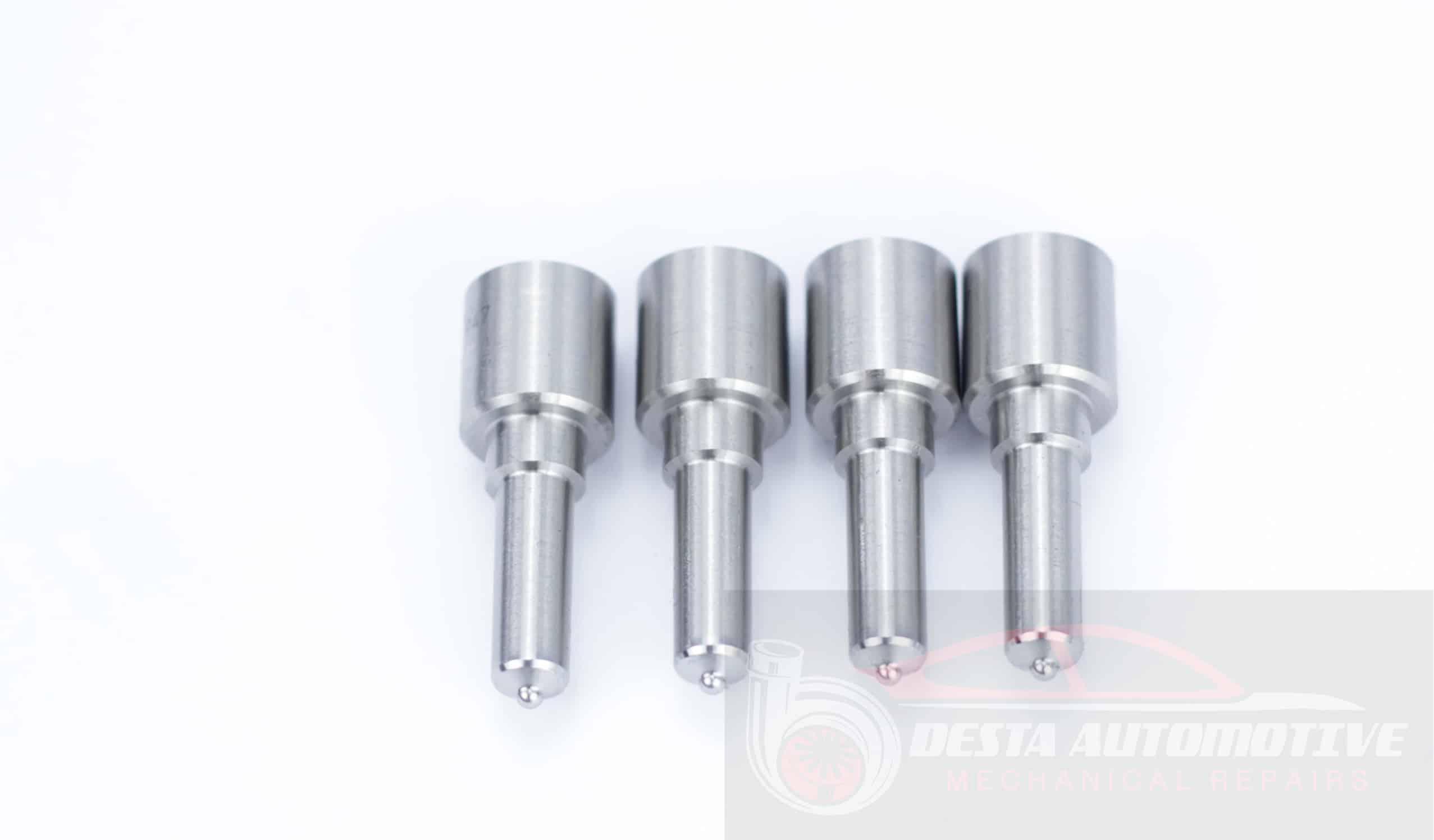
High flow diesel injector upgrades are the step that lets a tuned diesel keep making power once the factory injectors run out. If you’ve added a tune or turbo and want more, injectors are usually the next limit.
This guide explains what the +30, +50 and high flow numbers mean, when each one makes sense, what supporting parts you need and the mistakes that cost people money.

What a high flow injector does
The amount of fuel an injector delivers depends on three things: rail pressure, the size of the nozzle holes and how long the injector stays open.
All the engines in this guide use common rail injection. A high-pressure pump keeps fuel in a shared rail, and the ECU opens each injector electrically. The ECU decides when each injector fires and for how long, and it can split delivery into several small injections per cycle.
A tune can raise rail pressure and open the injector for longer. Past a certain point, though, a longer injection time means fuel is still burning late in the cycle. That raises exhaust gas temperatures and makes smoke instead of power.
Bigger nozzle holes solve this. They deliver more fuel in the same window, so the engine makes more power without running hotter.
+30, +50 and high flow: what the numbers mean
The number is the increase in fuel flow compared to a standard nozzle. A +30 nozzle flows about 30% more, a +50 about 50% more.
+30 nozzles
A +30 nozzle suits a tuned engine on a factory or mildly upgraded turbo. It’s part of our 200HP packages for the Isuzu 4JJ1 and Toyota 1KD.
+50 nozzles
A +50 nozzle is the next step once a larger turbo is fitted. On a non-DPF 4JJ1 with a 44mm turbo, +50 nozzles can support around 270 to 400HP and 650 to 850Nm at the wheels, depending on the rest of the build.
High flow injectors and nozzles
Above +50 sit the high flow options for serious towing and big-power builds. Examples include:
- 1KD high flow injectors (+60%) for N70 Hiluxes
- 1VD +95% high flow nozzles for non-DPF LandCruiser 70 and 200 Series
- 1VD +100% high flow nozzles for DPF LandCruiser 70 and 200 Series
Choosing the size
Pick the injector for the turbo and the power target, not the other way around. The turbo decides how much air is available, and the fuel has to match it. A +30 on a factory turbo and a +50 on an upgraded turbo are balanced setups. A +50 on a factory turbo is not.
If a turbo upgrade is planned for later, talk to us before choosing. Fitting injectors twice costs more than fitting the right size once.
How to tell the injectors are the limit
On a tuned engine with an upgraded turbo, the injectors become the limit when the tune can only add fuel by holding them open longer. On the dyno, that shows up as power that stops climbing while smoke and exhaust temperatures keep rising.
At that point, more boost or a more aggressive tune won’t help much. The next step is bigger injector nozzles, so the same fuel arrives in a shorter window. That’s when high flow diesel injector upgrades make sense.
A typical upgrade path
Most builds follow the same order. Each step adds air and fuel together, with the tune and driveline to match.
| Step | Injectors | Turbo | Also needed |
|---|---|---|---|
| Tune only | Standard, in good condition | Factory | Healthy clutch |
| Mild build | +30 nozzles | Factory or mild upgrade | Tune, matched clutch |
| Bigger turbo build | +50 nozzles | Upgraded turbo | Tune, intercooler, airbox, exhaust, clutch |
| Big power or heavy towing | High flow injectors or nozzles | Upgraded turbo | Full matched setup and dyno tune |
Each step builds on the one before. Jumping straight to big injectors without the air, tune and driveline to match is where most problems start.

Nozzles or complete injectors?
You can upgrade by fitting new nozzles to your existing injector bodies, or by replacing the full injectors.
Nozzles cost less, but the injector bodies need to be in good condition. We recommend a diesel shop removes the injectors and fits the nozzles. You can also send your injectors to us and we’ll fit and test them.
Complete injectors make more sense on high-kilometre engines or when the originals are already worn. We stock brand new genuine Denso standard, +30 and +50 injectors for engines like the 4JJ1.
When ordering nozzles, include your rego and state so we can match them to your injector code. If you’re unsure which option suits your engine, we can test the injectors first.
| Factor | Nozzles | Complete injectors |
|---|---|---|
| Cost | Lower | Higher |
| Needs healthy injector bodies | Yes | No |
| Best for | Lower-kilometre engines | High-kilometre or worn injectors |
| What’s involved | Remove, rebuild and test | Fit, code and tune |
What’s involved in fitting nozzles
The injector is stripped, the old nozzle comes off and the body is cleaned and inspected. The new nozzle is fitted, the injector is reassembled and then it’s tested before it goes back in the engine.
If the internals of the injector body are worn, a new nozzle won’t fix that. Worn bodies leak more fuel back to the tank and don’t hold pressure properly, so the injector still runs badly. That’s when complete injectors are the better buy.
Many Denso common rail injectors carry a correction code that’s registered to the ECU when they’re fitted. It lets the ECU account for small differences between injectors, so each cylinder gets the right amount of fuel.
New washers and seals every time
Every time an injector comes out, it should go back in with new copper washers and seals. A reused washer may not seal, and a leaking washer lets combustion gas past the injector. We stock fitting kits such as the 1KD-FTV injector fitting kit and the 4JJ1 injector washer kit.
Supporting mods for high flow diesel injector upgrades
Bigger injectors only work as part of a matched setup. Most problems we see with high flow diesel injector upgrades come from missing one of these.
- A tune. Without retuning, the ECU keeps the same injection timing and duration, so the engine gets too much fuel. That means smoke and high exhaust temperatures.
- More air. Extra fuel needs extra air to burn. That’s why +50 nozzles are designed to go in after a turbo upgrade, along with an intercooler, airbox and exhaust.
- Clean fuel. Injectors are sensitive to dirty fuel and water. Keep fuel filters changed on time.
- Driveline. More torque needs a stronger clutch on manuals, or cooling and transmission upgrades on autos.
Why the tune matters as much as the injectors
The ECU doesn’t know bigger nozzles have been fitted. It calculates fuel from injection time and rail pressure based on the factory injectors. Fit bigger nozzles without a tune and every injection delivers more fuel than the ECU thinks it does.
A proper calibration tells the ECU how the new injectors flow, then sets fuelling, timing and rail pressure to suit the turbo and the rest of the build. We do this on the dyno, where we can load the engine and check power, smoke and temperatures before the vehicle goes home. Read more about custom dyno tuning.
Air, fuel and driveline
On the air side, a bigger turbo, a better intercooler and a free-flowing intake and exhaust let the engine burn the extra fuel cleanly. We stock turbos and intercoolers for the same platforms as our injectors.
On the fuel side, clean filters and regular water drains protect expensive injectors. On the driveline side, a manual needs a clutch rated for the new torque. See our BRC clutch kits guide for options by vehicle.
What changes on the road
A matched injector upgrade mostly shows up in the mid-range. The engine pulls harder from low revs, holds a gear longer on hills and recovers speed faster when overtaking or towing.
When the setup is tuned properly, it should start, idle and cruise like a stock vehicle. Smoke under hard acceleration should be minimal. If an upgraded engine smokes heavily, idles rough or knocks, something in the setup isn’t matched.
Fuel use depends on how you drive. The extra power is there when you ask for it, and using it often will use more fuel.
What affects the cost
Pricing depends on the vehicle and the build, so we quote each job after checking it. The main factors are:
- Nozzles or complete injectors. Nozzles cost less if your injector bodies are healthy.
- Labour. Injector access varies a lot between engines.
- The tune. Bigger injectors always need a calibration to match.
- Supporting parts. A turbo, intercooler or clutch may be needed for the injectors to work properly.
Buying the injector upgrade as part of a power package means the parts are matched from the start. Book online for a quote on your vehicle.
High flow injectors on DPF vehicles
DPF engines need more care with fuelling. Extra smoke means more soot for the diesel particulate filter to trap and burn off, which means more frequent regenerations.
That’s why the 1VD high flow nozzles come in separate DPF and non-DPF versions, and why the tune matters even more. A good calibration keeps combustion clean enough for the DPF to do its job.
It’s also worth checking the DPF’s condition before an upgrade. A filter that’s already struggling to regenerate will cause problems no matter which injectors are fitted.
Removing a DPF on a road vehicle isn’t legal in Australia, and we don’t do it. Every injector upgrade we fit to a DPF vehicle keeps the emissions equipment in place and working.
Signs your current injectors are worn
If you’re not chasing power but your diesel isn’t running right, worn injectors could be the cause. Common signs include rough idle, knocking, extra smoke, hard starting and higher fuel use. Our article on failing 1KD injectors goes through them in detail.
Fitting high flow injectors to an engine with other faults won’t fix them. If the engine already smokes, knocks or runs rough, we diagnose that first. For routine care, see our guide to diesel injector service.
Injector upgrades by platform
Isuzu 4JJ1
The 4JJ1 has the widest choice. There are genuine Denso +30 and +50 injector nozzles, plus brand new genuine Denso injectors in standard, +30 and +50 for both the 2006 to 2012 and 2012 to 2016 models. The +50 4JJ1 Denso injectors for the 2006 to 2012 D-Max and Colorado suit owners who want new injectors rather than rebuilding the old ones.
Toyota 1KD
The 1KD has +30 and +50 options as both injector nozzles and complete injectors, plus new standard or +60% high flow injectors. On early 1KD engines, check the injector washers at the same time, as washer leaks are a known problem.
Toyota 1VD
Pre-DPF 1VD LandCruisers can run +30 injectors. For bigger builds, the +95% high flow nozzles suit non-DPF engines and the +100% nozzles suit DPF engines. Make sure the nozzle matches your engine before ordering.
Ford, Mazda and Holden
The 2.5L and 3.0L Ranger and BT-50 have +30 and +50 nozzles, and the 3.2L has +30 nozzles. The RG Colorado 2.8L has +50 nozzles. As with every platform, these need a tune to match.
Injector options by engine
| Engine | Vehicles | Options |
|---|---|---|
| Isuzu 4JJ1 | D-Max, MU-X, Rodeo, Colorado | +30 and +50 nozzles, new genuine Denso standard, +30 and +50 injectors |
| Toyota 1KD | Hilux, Prado | +30 and +50 injectors and nozzles, new standard or +60% high flow injectors |
| Toyota 1VD | LandCruiser 70 and 200 Series | +30 injectors (pre-DPF), +95% non-DPF and +100% DPF high flow nozzles |
| Ford and Mazda | Ranger, BT-50 | +30 and +50 nozzles for the 2.5L and 3.0L, +30 nozzles for the 3.2L |
| Holden 2.8L | RG Colorado | +50 nozzles |
See the full range in our injectors category.

How we fit an injector upgrade
Most high flow diesel injector upgrades we do are part of a power package, but the process is the same when injectors are fitted on their own.
- Plan the build. We confirm the power target, the turbo, and how the vehicle is used, then choose the injector size to match.
- Check the engine. We scan for fault codes, look at injector correction values and check the fuel filter and any signs of washer leaks.
- Fit the injectors. Nozzles or complete injectors go in with new washers and seals, and correction codes are registered where needed.
- Tune on the dyno. We calibrate fuelling, timing and rail pressure for the new injectors and check smoke and temperatures under load.
- Road test. We confirm the vehicle drives cleanly, starts easily and idles smoothly.
Common mistakes with high flow diesel injector upgrades
- Fitting injectors without a tune. The engine over-fuels, smokes and runs hot, and you don’t get the power.
- Fitting +50 nozzles on a factory turbo. There isn’t enough air to burn the extra fuel cleanly.
- Putting new nozzles in worn injector bodies. The injector still leaks and runs unevenly. Complete injectors are the better choice on tired engines.
- Reusing old washers and seals. A leak at the washer can contaminate the oil and cause far bigger problems than the injector upgrade solves.
- Ignoring the driveline. A factory clutch that was coping with a tune can slip once the extra fuel and torque arrive.
Looking after upgraded injectors
High flow injectors are as sensitive to dirty fuel as standard ones. Protecting them is mostly about fuel.
- Change fuel filters on time. Use the interval in your service book, and sooner if you fill up at remote servos or from drums.
- Drain the water separator when the warning light comes on, and check it at every service.
- Consider a pre-filter if you tour remote areas where fuel quality is less predictable.
- Have the correction values read at services once the engine has high kilometres. A drifting injector shows up there before it causes problems.
- Watch for early signs such as rough idle, a cold start knock or extra smoke. Catching a problem early is far cheaper than replacing a set of injectors.
Our guide to diesel injector service covers routine checks in more detail.
FAQs
Do I need a tune with high flow injectors?
Yes. The ECU has to be recalibrated for the larger nozzles. Without it, the engine will over-fuel, smoke and run hot.
Can I fit +50 nozzles on a factory turbo?
They’re designed for engines with an upgraded turbo. On a factory turbo there isn’t enough air to burn the extra fuel cleanly.
Can I fit nozzles myself?
We recommend a diesel shop does it, as injectors need to be removed, rebuilt and tested. You can send your injectors to us and we’ll fit and test the new nozzles.
Will high flow injectors use more fuel?
Fuel use depends mostly on how the vehicle is driven. Driven gently, a well-tuned setup uses a similar amount. Using the extra power often will use more fuel.
Will bigger injectors make my ute smoke?
Not if the setup is matched and tuned properly. Smoke comes from fuel without enough air to burn it, which is why the turbo, intercooler and tune matter as much as the injectors.
Will an injector upgrade hurt reliability?
Reliability depends on the whole setup. Problems usually start when injectors are fitted without enough air, without a tune, or with a tune that pushes exhaust temperatures too high. A matched build tuned on the dyno avoids those.
Do I need to upgrade every injector?
Yes. Every cylinder needs to get the same amount of fuel, so the injectors are upgraded as a full set, whether that’s four, five or eight. Mixing sizes makes the engine run unevenly.
Do high flow injectors help with towing?
They can, as part of a matched build. Our article on high flow injectors for towing covers that use in detail.
Get the right injectors for your build
Desta Automotive is a diesel performance workshop at 34-38 Railway Tce, Rocklea, Brisbane. Our power packages pair injector upgrades with ECU calibration and custom dyno tuning.
Get a quote or book online or call (07) 3568 4951.