

A 4JJ1 turbo upgrade is the step that takes a tuned D-Max past the 200HP mark. The non-DPF 4JJ1 responds well to a bigger turbo, and there’s a wide range to choose from, from mild 44mm bolt-ons to big F55 and F66 builds.
This guide compares the main options for the 2006 to 2016 non-DPF 4JJ1 in the D-Max, MU-X, Holden Rodeo and RC Colorado. For 2017 to 2020 models, see DPF 4JJ1 turbo upgrades.

4JJ1 turbo upgrades compared
| Turbo | Type | Best for |
|---|---|---|
| PKS 44mm | Gated, genuine IHI | Stock replacement upgrade, 200 to 300HP |
| Flex R31 Pro V2 44mm | Gated | Towing and performance builds, up to around 300HP |
| PPRC 44mm | Gated | Strong low-down response, tuned to 30 to 35psi |
| PPRC F55 | Gated | Mid to high-range power, tuned to 35 to 40psi |
| Flex F55 V2 | High boost, rated to 60psi | Fully tuned builds, 250 to 350HP |
| Flex Pro F66 (48.5mm and 56mm) | Gated | Flagship big-power builds |
Which 4JJ1 do you have?
The 4JJ1 was used across several models, and the turbo is only one part of the job. Your era decides the clutch type, the packages that suit and some of the pipework.
| Era | Vehicles | Manual clutch type |
|---|---|---|
| 2006 to 2012 | Holden Rodeo RA, Holden Colorado RC, Isuzu D-Max | Pull type |
| 2012 to 2016 | Isuzu D-Max RT, Isuzu MU-X (2013 to 2016) | Push type |
| 2017 to 2020 | D-Max and MU-X with a DPF | Push type, different turbo |
The RG Colorado from 2012 on isn’t a 4JJ1. It uses a different engine, so none of these turbos suit it. The 2020+ D-Max runs the newer 4JJ3, covered in our 4JJ3 turbo upgrade guide.
Several turbos here, including the PKS 44mm, Flex R31 Pro V2, PPRC 44mm and Flex F55 V2, are also listed for the 1KD Hilux. They’re supplied to suit the engine you order for, so always tell us which one you have.
Is your 4JJ1 ready for a bigger turbo?
Most non-DPF 4JJ1s are now ten years old or more, and many have big kilometres. A 4JJ1 turbo upgrade adds boost, heat and cylinder pressure, so it pays to check the engine is healthy before you spend money on the turbo.
- Injectors. Worn injectors or leaking injector seals cause smoke, rough running and soot. Fix them first, or plan to upgrade them as part of the build. We list a 4JJ1 injector washer kit and fitting kit for the 2008 to 2012 engine.
- Blow-by. Excess crankcase pressure from a tired engine pushes oil past turbo seals and into the intake. A new turbo will look like it’s leaking oil when the real fault is in the engine.
- Oil feed and drain. Check both for carbon build-up and kinks. On a high-kilometre engine it’s often worth replacing the feed line rather than reusing it.
- Intake carbon. Years of EGR soot narrow the intake and upset airflow. Our guide to diesel intake cleaning explains when a clean is worth it.
- Cooling. A tired radiator that copes at standard power can struggle once the engine makes more heat on a long tow.
- Boost hoses. Old intercooler hoses split under extra boost. Replace any that are soft, swollen or oily.
None of these checks take long, and they decide whether the new turbo lasts. We go through them before quoting a build.
44mm turbos: the most popular step
A 44mm turbo is the turbo in our 250HP 4JJ1 packages. It spools early enough for towing and adds plenty of top end.
PKS 44mm
The genuine PKS 44mm turbo is a brand new IHI unit and a good choice if your factory turbo is worn and you want a bit more. It bolts to the standard exhaust manifold and comes with a dump flange, oil feed and drain kit, studs, nuts and gaskets. We can also supply a PKS stainless dump pipe for the RC Colorado and D-Max.
Flex R31 Pro V2 44mm
The Flex R31 Pro V2 is a gated 44mm turbo for builds up to around 300HP. It’s a direct bolt-on with minimal modifications.
PPRC 44mm
The PPRC 44mm is built for low-down response. It has a high-response turbine wheel, upgraded thrust bearings and a main shaft 40% stronger than standard. On the RC Colorado and pre-DPF D-Max it bolts on with changes to the oil feed and drain hoses and dump pipe. We can supply those parts.
Bigger builds: F55 and F66
PPRC F55
The PPRC F55 shifts the focus to mid and high-range power. It’s designed for 40psi and suggested tuning is 35 to 40psi.
Flex F55 V2
The Flex F55 V2 is rated to 60psi and supports 250 to 350HP in fully tuned builds.
Flex Pro F66
The Flex Pro F66 is the flagship of the Flex Pro range, available in 48.5mm and 56mm versions. The 56mm has a billet compressor wheel and comes with a wastegate actuator, gaskets, drain tube and oil feed line.
What the boost numbers mean
Turbo listings quote boost in psi, but the number on the box isn’t a target to chase. A rating such as the Flex F55 V2’s 60psi is what the turbo is built to handle. The suggested tuning range, such as 30 to 35psi for the PPRC 44mm, is where it works well on a 4JJ1 with the right supporting parts.

Where your tune ends up inside that range depends on fuel, intercooling, exhaust temperature and what the vehicle does. A towing build is usually set up for strong torque and safe temperatures under long loads. A weekend build can run harder, because it spends less time at full load.
More boost means hotter intake air and more stress on head gaskets, pistons and the clutch. That’s why we finish gated 4JJ1 builds on the dyno, where the tuner can see boost, fuel and exhaust temperature together. See our page on custom dyno tuning for how that’s done.
Gated turbos and the factory VGS system
The factory 4JJ1 turbo uses variable geometry, which Isuzu calls VGS. Vanes in the turbine housing change position to build boost early, and the ECU controls them. The variable geometry turbocharger page explains how the vanes work.
A gated turbo has no vanes. Boost is controlled by a wastegate that opens to let exhaust bypass the turbine once boost reaches target. The factory ECU has no way to manage that, so the tune takes over boost control and sets fuel to match.
This is why the tune and turbo are one job on a gated 4JJ1 build. Fitting the turbo first and booking the tune later leaves the vehicle without proper boost control in between.
Low mount or high mount on the 4JJ1
The PKS 44mm bolts to the standard exhaust manifold, and the PPRC 44mm and Flex R31 Pro V2 bolt on with minor changes. For those builds we list a 4JJ1 44mm dump pipe.
Some bigger F55 builds move the turbo to a high mount position. For those we list the BRD 4JJ1 high mount manifold and a 4JJ1 F55 high mount dump pipe. A high mount changes the oil lines, dump pipe and intercooler piping, so it adds parts and labour. We’ll tell you whether your build needs it when we quote.
Supporting parts for a 4JJ1 turbo upgrade
- Tune. Every gated turbo needs a tune for boost control and fuel. See custom dyno tuning.
- Injectors. After a 44mm or F55 turbo, +50 4JJ1 nozzles can support 270 to 400HP at the wheels.
- Intercooler. The Flex intercooler for the 2012 to 2020 D-Max and MU-X keeps intake temperatures down.
- Clutch. BRC kits suit both the earlier pull-type and later push-type 4JJ1 clutches.
- Exhaust. A 3″ stainless exhaust lets the bigger turbo breathe.
Injectors: matching fuel to air
A bigger turbo supplies more air, but power only comes when there’s fuel to burn with it. On a milder 44mm build, healthy factory injectors may be enough. As the turbo and power target grow, the injectors become the limit.
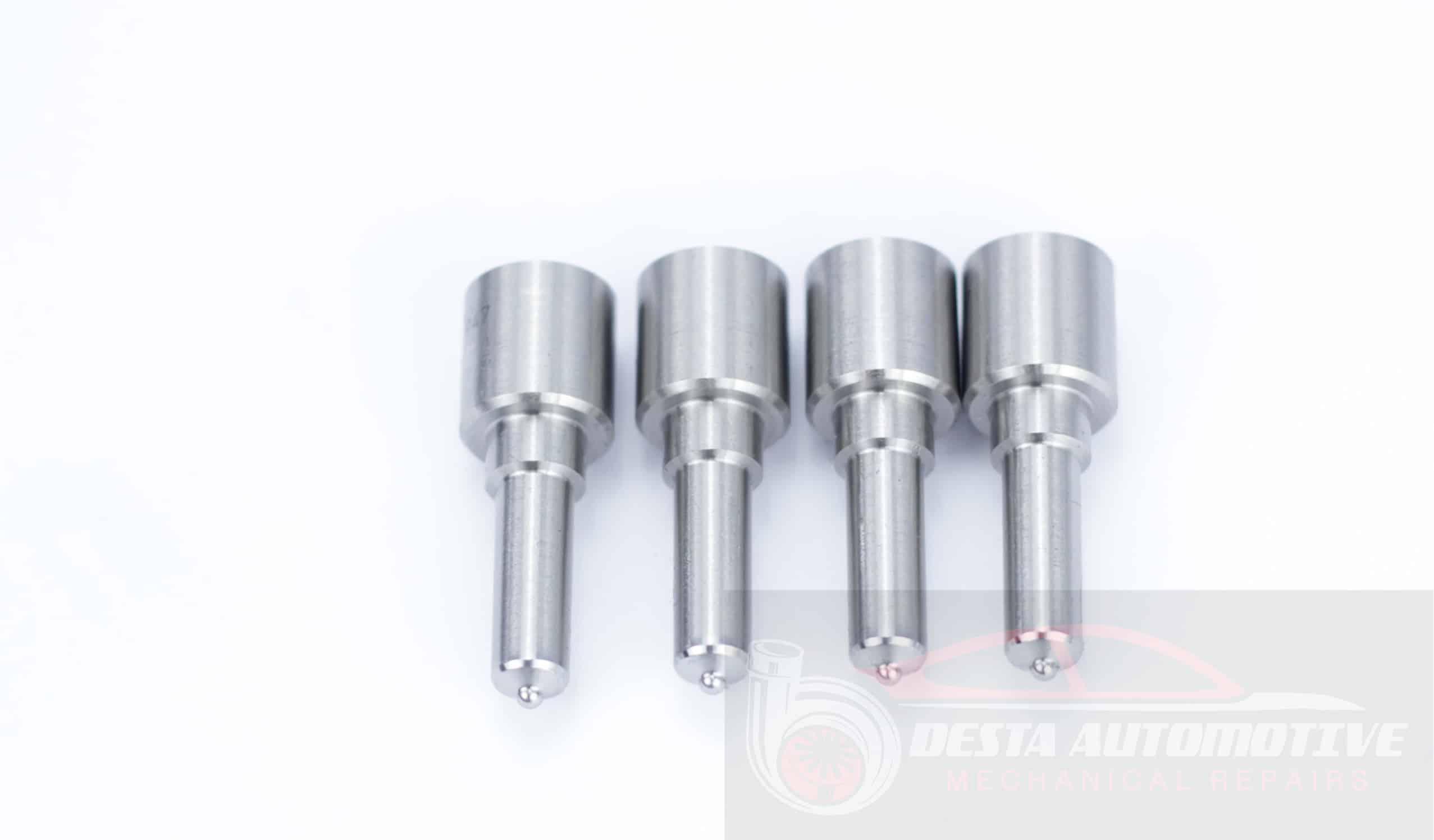
We list genuine Denso +30 and +50 options for both eras. For the 2006 to 2012 engine there are +30 and +50 injectors, and for 2012 to 2016 there are +30 and +50 injectors. Nozzles alone, such as the +30 4JJ1 nozzles, suit owners whose injector bodies are healthy. Our high flow diesel injector upgrades guide explains the difference.
Clutch: pull type or push type
Order the clutch to suit your era. The 2006 to 2012 engine uses a pull-type clutch, and the 2012 to 2016 engine uses a push type.
| Build | Pull type (2006 to 2012) | Push type (2012 to 2016) |
|---|---|---|
| Up to 250HP | BRC 250HP pull type or 350HP | BRC 350HP push type |
| 250 to 350HP | BRC 350HP pull type | BRC 350HP push type |
| Big F55 or F66 build | BRC 500HP pull type | Talk to us |
There’s also a BRC 4JJ1 button clutch and flywheel kit for the RC Colorado, RA Rodeo and D-Max, which suits harder-driven builds. Our BRC clutch kits guide compares them.
Automatic 4JJ1s don’t have a clutch to slip, but they do have heat to manage. Extra torque and towing raise transmission fluid temperature, and hot fluid wears the transmission faster. If you tow with an auto, ask us about transmission cooling when we quote the turbo build, so it’s planned in rather than added after a problem.
Exhaust
A 3″ exhaust lets the bigger turbo breathe and helps keep exhaust temperatures down. For the 2012 to 2016 D-Max, the Manta 3″ stainless full exhaust with cat is one option. For the earlier D-Max, Manta systems are listed by body style and build date, such as the 3″ system with cat for the 2010 to 2012 LWB cab chassis. Check your body style and build date before ordering, and keep the catalytic converter in place on a road vehicle.
Matching the turbo to the job
| How you use it | Turbo to look at | Why |
|---|---|---|
| Towing a van or boat | PPRC 44mm, Flex R31 Pro V2 or PKS 44mm | Early spool and strong low-down response |
| Worn factory turbo, want a bit more | PKS 44mm | Brand new IHI, bolts to the standard manifold |
| Touring with a mild tune | PKS 44mm or Flex R31 Pro V2 | Simple bolt-on, up to around 300HP |
| Weekend and sand driving | PPRC F55 or Flex F55 V2 | More mid and high-range power |
| Maximum power | Flex Pro F66 | Flagship turbo for full builds |
If the vehicle tows most weekends, go 44mm. A bigger turbo on a towing 4JJ1 makes more peak power but less of the low-down torque that pulls a van up a hill.
Common 4JJ1 turbo upgrade mistakes
- Going too big for the job. An F55 on a towing ute often feels slower off the line than a 44mm, even with more power on the dyno sheet.
- Leaving the injectors standard on a big build. Without enough fuel, a big turbo can’t make its power, and pushing the factory injectors too hard costs reliability.
- Reusing old oil lines. Oil feed lines on high-kilometre 4JJ1s can be partly blocked with carbon. A new turbo on a restricted feed won’t last.
- Ordering the wrong clutch type. Pull and push type clutches aren’t interchangeable. Check your era first.
- Mixing up DPF and non-DPF parts. Turbos and dump pipes for the 2017 to 2020 engine are different.
- Ignoring boost leaks. Old intercooler hoses split under extra boost. Pressure test the system and replace tired hoses while the turbo is going on.
What fitting a 4JJ1 turbo involves
On a typical 44mm gated turbo job, the factory turbo, dump pipe and oil lines come off together. We inspect the old 4JJ1 turbo for clues, such as oil in the compressor housing or a damaged wheel, because that tells us whether something else needs fixing.
The new turbo goes on with new gaskets and either new or cleaned oil lines, depending on what we find. The PKS 44mm comes with its own dump flange, oil feed and drain kit, studs, nuts and gaskets, while the PPRC 44mm needs changes to the oil feed and drain hoses and dump pipe on the RC Colorado and pre-DPF D-Max.
Before first start, we prime the turbo with oil and fit a fresh oil filter. Then the engine idles while we check for oil, coolant and exhaust leaks. Last, the vehicle goes on the dyno for the tune, where boost, fuel and exhaust temperature are set under load.
After the upgrade
For the first few drives, keep an ear out for new noises and check under the vehicle for oil or exhaust leaks. Hose clamps and joints settle after a few heat cycles, so have them checked at your next service. After towing or a hard run, let the engine idle for a minute before switching off so heat can soak out of the turbo.
Still on the factory turbo?
If your 4JJ1 is still on the factory turbo, a tune and exhaust are the usual first step. Our 200HP packages for the 2006 to 2012 engine come in manual and automatic versions, and there are 200HP parts packages for manual and automatic vehicles if you’d rather fit them yourself.
Once a tuned 4JJ1 runs out of air, the signs are familiar. Exhaust temperatures climb on long tows, power goes flat high in the revs, and more fuel only brings more smoke. That’s when a 44mm turbo makes sense.
Start with a package
Our 250HP packages bring a 44mm turbo together with the supporting parts and tune for each era. For the 2006 to 2012 engine, there are 250HP packages for manual and automatic vehicles. For 2012 to 2016, there are 250HP packages for manual and automatic vehicles. Our Isuzu D-Max performance upgrades guide explains what each package includes.
FAQs
What’s the best 4JJ1 turbo for towing?
A 44mm turbo is the most common choice. It spools early enough for towing and supports a 250HP build.
Do I need a tune with a gated turbo?
Yes. Gated turbos use a wastegate for boost control instead of the factory VNT system, so the engine must be tuned.
Can I fit these to a DPF D-Max?
The turbos above suit the non-DPF 4JJ1. See our DPF 4JJ1 turbo upgrade guide for 2017 to 2020 models.
My turbo has failed. Should I replace or upgrade?
If you want factory performance, a genuine replacement is the simplest fix. See our guide to D-Max turbo replacement.
What boost should I run on my 4JJ1?
That’s set by the tuner to suit your turbo, fuel and use. The PPRC 44mm’s suggested tuning is 30 to 35psi and the PPRC F55’s is 35 to 40psi, but the right figure for your vehicle comes from the dyno.
Will a 44mm turbo feel laggy after the factory turbo?
A 44mm gated turbo builds boost a little later than the factory VGS turbo, but on a well tuned 4JJ1 the difference is small and it pulls harder once it’s on boost. If low-down response is your priority, the PPRC 44mm is built for it, with a high-response turbine wheel.
Should I do the injectors at the same time?
On a 44mm build, it depends on their condition and your power target. On an F55 or F66 build, yes. Doing both at once means one tune session instead of two, and the tuner can set fuel for the final setup.
Do I need a bigger intercooler?
On most 44mm and F55 builds, yes. An intercooler cools the air the turbo compresses, and cooler air is denser. The Flex intercooler suits the 2012 to 2020 D-Max and MU-X.
Buy or book fitting
Browse all turbos, or have your 4JJ1 turbo upgrade fitted and tuned at our workshop at 34-38 Railway Tce, Rocklea, Brisbane. Get a quote or book online or call (07) 3568 4951.